Rethinking machine safety: a systems-based approach for safer workplaces
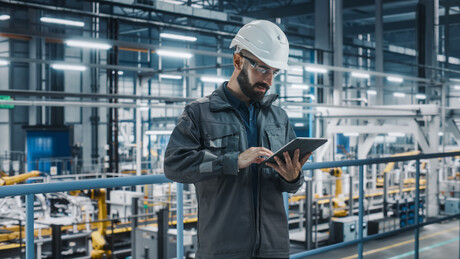
In mining, construction and materials handling, the most serious incidents continue to involve machinery and moving equipment. MICHAEL BARNARD, VP of Sales at Speedshield Technologies, sets out how a systems-based approach may be able to help.
Australia’s workplace safety record has improved steadily over the past decade, but one question is still troubling industries such as mining, construction and materials handling: why do the most serious incidents continue to involve machinery and moving equipment? According to Safe Work Australia, machine operators and drivers account for a disproportionate share of injuries and fatalities, with a rate of around 6.7 deaths per 100,000 workers.1 That’s more than five times the national average across all workplaces. It’s a pattern we’ve seen emerging for some time, even as safety frameworks, training programs and compliance standards have matured. If progress has been made in these areas, why do these risks remain so stubbornly embedded in industrial, construction and mining environments?
Part of the answer is that these industries, in particular, are moving faster than some safety practices can keep up with. Worksites in 2026 are faster, more complex and far less predictable than traditional safety models were originally designed for. Heavy vehicles, automated systems and human workers now operate side by side in environments that are constantly shifting, and visibility is sporadic and limited. Conditions change by the minute, decision-making happens under pressure and machine safety is still too often treated as a checklist or set of isolated controls. This points to something far broader and more systemic, shaped by how people, equipment and environments interact in real time. The challenge facing these environments is unique — it’s not enough to simply attempt to prevent accidents in isolation; teams need to gain a deeper understanding of how risk emerges across the entire site and how it can be anticipated before it leads to harm.
Have traditional safety models reached their limit?
Machine safety has typically been built on a simple premise — identify hazards, put controls in place and expect operators to follow procedures. In more stable and predictable environments, like a small, well-organised warehouse, that approach can be effective. But in larger, fast-paced industrial settings, the cracks start to show. Operators are unfairly expected to maintain full and complete awareness of their surroundings while they manage incredibly complex equipment, navigate unpredictable terrain and keep their eyes “on the job.” Dust clouds and fog can obscure vision, rain can change ground conditions, workers can unknowingly step into blind spots, and that’s only scratching the surface.
The reality is that many of these environments place an extraordinary mental burden on individuals, asking them to process multiple streams of information at once while making split-second decisions. Add to this the reliance on alarms, cameras and warning systems that aren’t always accurate or calibrated to real risk, and a new problem begins to emerge. When alerts are too frequent or poorly timed, or false flags are constantly raised, operators become desensitised to them. It’s important to stress that this isn’t the fault of operators, it’s simply a natural result of humans being placed in environments where noise, fatigue, distraction and pressure are common. We call this the ‘boy who cried wolf’ effect. If a poorly implemented or calibrated system flags too many non-critical events or false alarms, it gradually loses credibility, and the moments that truly matter get overlooked. How can an operator be expected to trust in a system that is constantly bombarding them with unnecessary lights, sounds and prompts?
Most incidents aren’t the result of carelessness on the part of the operator, but a mismatch between the demands of the environment and the way safety systems have been designed, with too much responsibility placed on human attention and not enough consideration given to how those systems behave under real-world conditions.
Why machine safety is systemic issue
If traditional models focus on individual hazards, a systems-based approach asks a different question: how do risks emerge from the interaction between people, machines and the environment as a whole? On a busy worksite, these elements are constantly influencing one another. A vehicle changes direction, a worker steps into a shared space, visibility shifts due to dust or lighting, and suddenly a routine task carries a different level of risk. None of these factors exist in isolation, and yet safety is often managed as though they do. Looking at the system instead of the individual event makes it easier to see how seemingly minor changes can combine to create dangerous situations.
This perspective also highlights something else: many incidents that appear unpredictable at the moment they occur are, in fact, the result of patterns that develop over time. Repeated near misses, consistent blind spots or common movement paths between people and machinery all point to underlying risks that can be identified earlier if the system is being observed as a whole. Truly designing for safety means moving beyond static controls and thinking about how workflows, site layouts and real-time conditions shape behaviour. Site managers need to recognise that risk is dynamic, not fixed, and that effective safety strategies need to adapt to what is happening on-site rather than relying on assumptions about what should happen in theory.
From reactive compliance to predictive resilience
The good news is that technology is catching up and things are beginning to change. For a long time, safety improvements have been driven by investigation. An incident happens, it is analysed in detail and controls are introduced to prevent it from happening again. That process is still important, of course, but it’s inherently retrospective. It depends on something going wrong first, and that’s not acceptable in such a high-stakes environment, particularly when many incidents are preceded by patterns that go unnoticed in day-to-day operations.
Those patterns often take the form of near misses, repeated interactions between people and machinery in high-risk zones, or small deviations from expected workflows that gradually become normalised. On their own, these events may not trigger formal reporting, but taken together they offer valuable insight into where risk is building. The challenge here is visibility. Without a clear view of what is happening in real time, these signals are easy to miss. When operators are given timely, relevant feedback, it changes how they respond in the moment, allowing them to adjust behaviour before a situation escalates.
**************************************************
Designing machine safety systems that operators trust
Prioritise signal over noise
Focus on real, actionable risk. Too many alerts dilute attention and reduce response times.
Make interventions immediate and intuitive
In fast-moving environments, operators should not have to interpret or second-guess a warning.
Reduce cognitive load wherever possible
Safety systems should simplify decision-making, not add another layer of complexity.
Align with real-world workflows
Systems must reflect how work actually happens on site, not how it is assumed to happen.
Maintain consistency in how risk is communicated
Clear, predictable signals help build trust and enable faster reactions.
**************************************************
What’s needed is a different approach to how risk is detected and communicated on site. Rather than relying on operators to interpret camera feeds or respond to constant streams of alerts, newer safety approaches are beginning to focus on delivering clear, context-aware signals only when they are needed. By combining AI-powered machine vision with real-time processing at the edge, these systems can distinguish between routine activity and genuine risk, identifying when a person enters a hazardous proximity zone and triggering a response that is immediate, accurate and completely unambiguous. This also builds trust in the system itself, because the volume of unnecessary alerts is massively reduced. When a warning is delivered, it carries weight and prompts action. At the end of the day, safety technology in these environments only works if it can earn trust, support operators and provide a “joined up” overview of risk that can feed into broader safety policies and processes.
1. Key Work Health and Safety Statistics Australia 2025 now available. Safe Work Australia. Accessed 13 April, 2026. https://www.safeworkaustralia.gov.au/media-centre/news/key-work-health-and-safety-statistics-australia-2025-now-available
The air receiver registration duty most sites don't know they have
Air receivers are one of the quieter compliance gaps in Australian industry. Here's what the...
Mining and smelting complex implements pedestrian alert system
Designed to improve operator awareness, the system was deployed across a range of equipment...
Fewer breakdowns, fewer breaches: how automation tackles machinery risk and downtime together
Automation promises to provide the infrastructure to manage machinery risk at a scale and...