Why women's PPE is critical to workplace safety and readiness
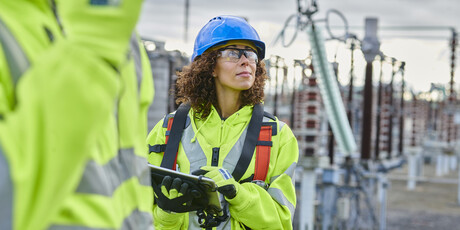
PPE is not one size fits all. Yet, as BARB NEWBY — Manager, QHSE & Auditing Services at Avetta — explains, too many women in Australia are still issued equipment designed on a male default, resulting in poor fit, reduced protection and avoidable risk.
Under Australia’s model Work Health and Safety Regulations, this is not a grey area.1 Regulation 44 requires that a person conducting a business or undertaking ensure PPE is suitable for the hazard, a suitable size and fit for the worker, reasonably comfortable, and used correctly.
In practice, PPE that doesn’t properly fit a worker isn’t considered suitable. The responsibility is about each individual worker, not a one-size-fits-all approach. Women aren’t a special case to be accommodated; they are workers who must be protected under the same legal standard as everyone else.
Despite this clarity, ill-fitting PPE remains a long-standing and normalised risk in many industries, driven by default procurement practices and legacy design assumptions. The result is that women are often forced to ‘make do’ with equipment that compromises both safety and performance. Some are left with no option but to wear PPE that is too large, requires constant adjustment, or creates additional safety risks, including snag or entanglement hazards around machinery. Others may only have access to respirators that do not properly seal, increasing exposure to airborne contaminants or hazardous particles.
The hazards of improper protection
Poorly fitting PPE undermines its function as a last line of defence and introduces avoidable exposure to hazards. These include electricity, radiation, noise, temperature extremes, air and water pressure changes, oxygen deficiency, traumatic or stressful events, and chemical exposure.
Appropriate PPE is particularly critical in respiratory protection. Where respirators are required, they must comply with AS/NZS 1716:2012,2 and their selection, use, fit testing, training, maintenance and storage must align with AS/NZS 1715:2009.3 Tight-fitting respirators must be fit tested before first use and at least annually, supported by a documented respiratory protection program.
If a respirator does not seal properly to the wearer’s face, it does not provide the intended level of protection. That is not a user issue; it is a system failure.
Similarly, poorly fitting hard hats, gloves, eyewear or body protection can create secondary hazards such as reduced visibility, impaired dexterity, snag risks or exposure gaps. In these cases, PPE can shift from a protective control to a contributing risk factor.
A systemic issue, not an individual one
Women’s PPE is not an emerging issue, but it is a long-standing risk that has been normalised through default design and procurement practices.
In many workplaces, PPE is still sourced on the assumption of a standard male body shape, with women expected to adapt. This includes equipment that is too large, requires constant adjustment, or fails to provide adequate coverage or seal.
The consequences are well documented in practice: equipment that shifts during use, respirators that do not seal correctly, gloves that reduce dexterity and protective clothing that increases entanglement risk in certain environments. These are not minor inconveniences — they are failures of risk control.
This is not about individual behaviour. It is about whether the control measures provided by an organisation are actually effective for the workforce using them.
Beyond the physical impact
Women have historically accepted wearing ill-fitting PPE, increasing their risk of harm, simply because it was the least-worst option available. But it doesn’t just increase their risk for injury; it also sends an unspoken message: ‘You don’t belong here.’ Workplace environments need to be built with inclusion in mind from the start, not as an afterthought, which must include PPE and other equipment being used by women. Women are hiding or suppressing their biological differences and the psychological realities that result, simply because they don’t want to risk being perceived as unable to do the job they were hired and paid to do.
Inclusion in workplace safety must therefore extend beyond policy statements. It must be reflected in the tools, equipment and systems used every day on the job.
This ultimately hits on the final impact of PPE for women: efficiency. In a workplace where PPE needs to be modified, continually adjusted or is simply not functioning as intended, it not only fails to provide protection but also reduces efficiency. Large gloves slow jobs that require fine motor skills. Misaligned vibration protection elements on gloves may necessitate more frequent breaks during the task. Adjusting uniforms, hard hats, glasses and respirators takes time and focus away from the task at hand. While safety comes first, efficiency matters to organisations and may be the catalyst needed for change in some instances.
Lifecycle changes and the need for adaptable PPE
It’s also important to note that women may need multiple sizes and styles of PPE to support natural life-cycle events, which have an outsized effect on women in the workplace. Pregnancy, mastectomy, hysterectomy and menopause can all lead to meaningful physical alterations to a woman’s measurements, weight and distribution of composition.
The historical approach of ‘shrink it and pink it’ may be an initially ‘cheap’ or ‘easy’ approach an employer could take, but it’s unacceptable, ultimately failing to safeguard employees, reduce risk or even meet legal compliance. PPE for women needs to be designed for women, not just men’s gear made in smaller sizes.
A compliant system is one that anticipates variation and provides options that remain suitable across different body types and changing needs.
**************************************************
Getting an entire workforce ready to work
- The first step is pretty simple. Ask female workers if their PPE fits, meets their needs or if there is anything that can be done to make it easier to work safely while using PPE. Find out if there are specific instances when adjustments are always needed, if it seems to become an inconvenience or ultimately fails. The employees wearing PPE will know what works and what doesn’t.
- A secondary approach is to observe how people are working in PPE. Often, if the PPE doesn’t look like it fits, is constantly being adjusted or does not seem to be functioning properly, it probably isn’t. Look at a variety of situations and across all tasks. This will also give you an idea of where PPE may be missing, not identified or not being used, which is a chance to really explore why.
- Finally, review fit testing outcomes, incident reports, workers compensation claims and worker feedback to identify recurring fit issues or patterns that may indicate PPE is not functioning as intended.
**************************************************
Women, like their male counterparts, show up to work each day to complete the task at hand, be efficient members of their organisations, and contribute to the achievement of safety, quality and production. Lack of appropriate gear and fear of othering or retaliation are standing in the way and putting their health and even lives at risk. Unfortunately, it seems that many employers are waiting for a similar hands-on experience — seeing a female employee in an ill-fitting male harness or trying to figure out why a fit test keeps failing — to finally make a change. Instead, organisations need to proactively ensure their PPE systems, procurement practices and safety processes are meeting existing WHS obligations for all workers.
1. https://www.safeworkaustralia.gov.au/doc/model-whs-regulations
2. https://www.standards.org.au/standards-catalogue/standard-details?designation=as-nzs-1716-2012
3. https://www.standards.org.au/standards-catalogue/standard-details?designation=as-nzs-1715-2009
The fire-protection potential of mycelium leather
Made from fungal networks cultivated using agricultural waste and water, could this wildfire...
The day after certification: why the right glove can become the wrong glove
A glove may be certified once, but it is tested by the work every day. Here's why safety...
Could Australia's use of this machine identify silicosis before damage occurs?
Introduced in Australia in 2024, the machine uses a simple breathing test to capture microscopic...