Why the future of HSE depends on how we integrate it into business strategy
Tuesday, 30 June, 2026
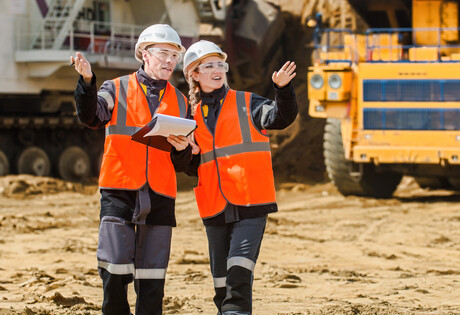
In the context of mining and construction, JACKIE HEGGER — Director of Health, Safety and Environment, APAC/Africa at Ausenco — explains the need for HSE professionals to understand the business just as deeply as risk management.
The strongest safety cultures I’ve seen in mining and resources aren’t built on fear, paperwork or compliance checklists. They’re built on trust, good decision-making and giving people the confidence to speak up and solve problems safely.
After more than 15 years working across the resources sector, I believe one of the biggest challenges facing health, safety and environment (HSE) today is that many organisations are still treating safety as a separate function rather than embedding it into the way the business operates.
Safety has always mattered in our industry. But as projects become more complex, the environments we operate in become more dynamic, and pressure around cost and delivery intensifies, our approach to HSE needs to evolve too.
In my experience, compliance alone doesn’t create safer workplaces.
I’ve worked with organisations that had excellent procedures, detailed systems and extensive reporting frameworks, but where people still felt hesitant to make decisions or raise concerns because they were afraid of getting something wrong.
Somewhere along the way, some businesses have unintentionally created environments where workers feel disempowered, despite often being the people closest to the risks and best placed to understand how work can be performed safely.
That’s where I believe the industry needs to shift its thinking.
The conversation can’t just be about what people can’t do. It needs to focus on how work can be done safely, efficiently and effectively. When organisations create space for those discussions, people become part of the solution rather than simply the recipients of rules.
One of the most important lessons I’ve learned throughout my career is that multiple things can be true at the same time. Safety matters. Cost matters. Time matters. Too often in industry, these priorities are framed as competing forces where one must be sacrificed for another to succeed.
I don’t believe that has to be the case.
The best outcomes happen when organisations understand the drivers behind each stakeholder’s priorities and learn how to connect safety to broader business value. When people speak the same language, safety stops being viewed as an obstacle and starts becoming part of operational success.
I saw this firsthand early in my career while working as an HSE Advisor at a power station.
At the time, maintenance crews were manually cleaning fly ash from inside air heaters using hoses. It was dirty, confined and high-risk work that required people to spend long periods inside hazardous environments before maintenance could even begin.
A new high-pressure water rig had the potential to dramatically reduce the amount of time workers spent inside the air heaters. The safety benefits were obvious. But the equipment came with a significant upfront cost, and initially, that made it difficult to gain support.
What ultimately changed the conversation wasn’t focusing solely on safety. It was demonstrating the broader operational value.
We showed through data that the equipment would not only reduce risk exposure, but also improve efficiency, reduce downtime and lower overall work hours. By reframing the discussion around both business performance and safety outcomes, we were able to secure support for the investment.
That experience shaped the way I think about HSE leadership today.
People rarely reject safety because they don’t care about it. More often, they struggle to see how it connects to the operational realities and pressures they’re managing every day. That’s why I believe HSE professionals need to understand the business just as deeply as they understand risk management.
This is particularly important in industries like mining and construction, where safety policies are often developed far removed from where the work is being performed. Workers are focused on highly specialised tasks, changing site conditions and operational pressures. If safety messaging feels disconnected from those realities, it becomes far harder to embed meaningful behaviours.
Most organisations I’ve worked with have robust safety processes in place that meet their duties under legislative requirements and engineering best practices. Leading organisations are taking this further by embedding safety into how we plan, how we lead and how we make decisions.
This means identifying hazards and operational risks early, before assets are built or systems are locked in, and considering how they will be managed across the full lifecycle, from construction through to operation, maintenance, modification and eventual decommissioning.
I’ve seen how this mindset not only improves safety outcomes, but also reduces rework, avoids delays and gives both the business and our clients greater confidence to progress projects, ultimately improving long-term operational performance.
I also believe organisations benefit enormously from looking outside their own industries for fresh ideas and perspectives. Every sector has different risk profiles, but the fundamentals of strong HSE leadership, including communication, governance, culture and human-centred decision-making, are remarkably similar.
Some of the most valuable insights I’ve seen have come from people entering the industry with experience from adjacent sectors or from independent perspectives challenging longstanding assumptions.
Particularly with older assets, organisations can become so focused on known issues that they overlook broader opportunities for improvement. In some cases, what initially appeared to be a safety concern has ultimately revealed opportunities to extend asset life, improve operational performance or reduce capital costs.
For me, that’s what making HSE matter really means.
It’s about making safety relevant to the business, grounded in evidence and integrated into decision-making at every level. It’s about recognising that people perform best when they feel trusted, informed and empowered to contribute.
When safety, culture and business strategy are aligned, the outcomes are better for everyone.
Hospital trials paid worker exercise
Around 100 Nepean Hospital workers will take part in a 12-month trial, involved in activities...
Five emerging transport leaders create utilities digital platform solution
The team set out to solve one of construction's most persistent problems: accessing accurate...
Opinion: Beyond the survey — what psychosocial risk management is becoming
The government-backed People at Work assessment platform will close on 2 October. This...