The glove paradox: why procurement should buy hand-protection outcomes, not SKUs
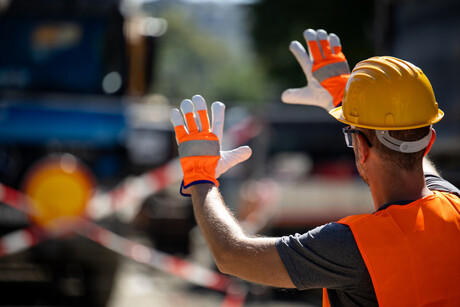
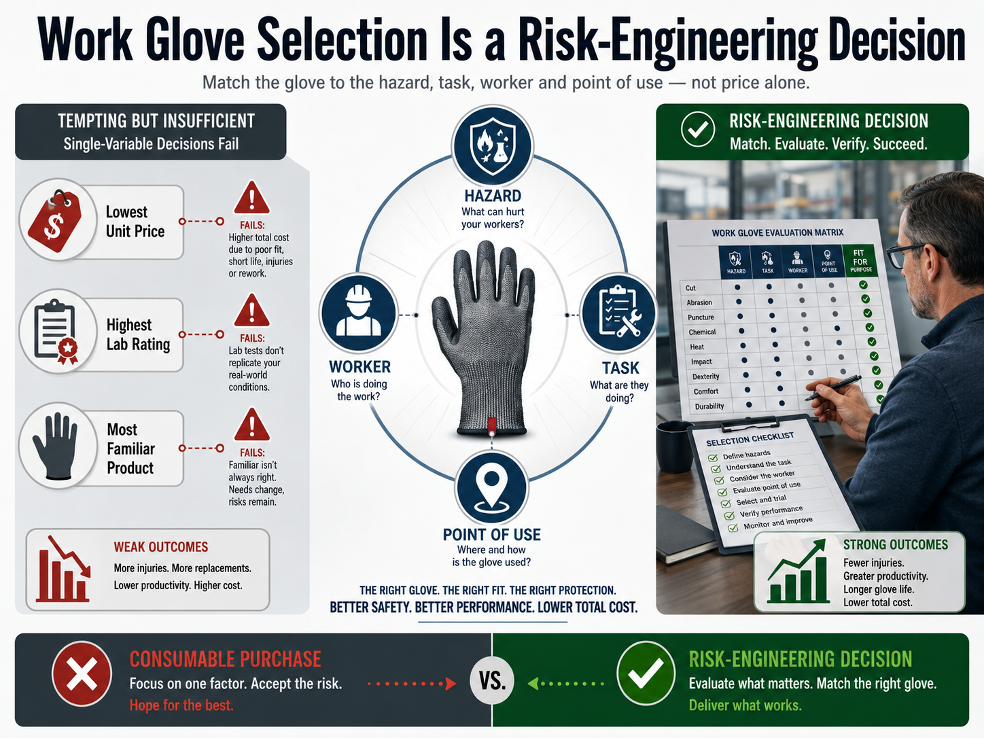
Choosing a work glove is never a single-variable decision. The lowest unit price, highest laboratory rating and most familiar product can each fail if the glove is not matched to the hazard, task, worker and point of use. As DAMIONE WRIGHT — Managing Director APAC at Mechanix Wear — explains, for procurement leaders, hand protection should be treated as a risk-engineering decision, not a consumable purchase.
A large organisation can buy gloves in good faith and still buy the wrong outcome. A tender may require recognised standards, credible suppliers, national distribution and a competitive price, yet the glove may still fail where exposure occurs.
It may be too hot, bulky, slippery, short for splash exposure, loose near moving equipment or unavailable when work starts. In that moment, the purchase order can look controlled while residual hand risk remains uncontrolled.
This is the glove paradox. Gloves are bought as SKUs, but they operate as risk controls. The real question is not, “Which glove is compliant?” It is, “Which hand-protection system produces the lowest residual hand risk at an acceptable total cost, with the least operational friction, across the real workforce?”
Why hand protection deserves procurement attention
Safe Work Australia’s 2025 national WHS statistics reported 188 traumatic worker fatalities in 2024 and 146,700 serious workers compensation claims involving at least one week of working time lost in 2023–24. Upper-limb injuries accounted for 48,700 serious claims. In Western Australia, WorkCover WA recorded 4615 hand injury claims in 2020–21.
For large employers, gloves influence more than injury prevention. They affect productivity, supervision burden, worker trust, inventory control, waste, claims experience and due-diligence evidence. Procurement sits at the centre.
The perfect glove does not exist
The first principle is uncomfortable but essential: every glove is a compromise between price, performance and protection. Increase cut, puncture or impact resistance and the glove may need denser yarns, overlays, guards or thicker coatings. Protection may rise, but tactility, heat release and dexterity may fall. Increase chemical or liquid-barrier performance and breathability often declines. Choose a thinner glove for precision work and the protection envelope narrows. Prioritise the lowest unit price and the organisation may pay through shorter wear life, higher consumption, non-wear, rework or injury exposure.
This is not an argument for trading safety down. It is an argument for making the trade-off visible: set the hazard threshold first, then optimise for work enablement, consistent wear, appropriate life and availability.
Protection is realised, not declared
| Realised Protection = Certified Protection x Task Fit x Adoption x Availability |
Protection collapses when any factor is weak. A glove with strong certified performance may deliver poor real-world protection if it does not fit the task, is removed for dexterity, or stockouts drive unapproved substitution. Conversely, a lower-rated glove that still meets the hazard threshold may deliver a safer outcome if it enables the job and is worn throughout exposure.
Standards are the floor, not the operating system
For Australian and New Zealand buyers, the AS/NZS 2161 series provides the central reference for occupational protective gloves. AS/NZS 2161.1 addresses selection, use and maintenance; AS/NZS 2161.2 adopts ISO 21420 general requirements; and AS/NZS 2161.3 adopts EN 388 for mechanical risks. ANSI/ISEA 105 is also relevant in multinational supply chains.
Standards create a common language. They support comparison, evidence gathering and minimum thresholds. But they do not decide the whole procurement question. A glove can be compliant and still be wrong for the task. A glove can be popular and still be under-protective. Mature procurement governance has to hold both truths at once.
The missing specification is behavioural
People do not comply with gloves in the abstract. They wear or remove gloves during a task, under pressure, in a specific environment and social setting. That makes behaviour a performance variable.
Workers make repeated micro-decisions: wear the glove, remove it for dexterity, change gloves, keep using a damaged glove, or work around the rule. Those decisions are influenced by risk perception, task friction, social norms, comfort, trust and access. A glove that slows the job, reduces feel, increases heat load or signals “procurement bought cheap again” will invite non-wear. Comfort and fit are not luxuries; they help determine whether protection is used during exposure.
Specify by task family
Large organisations often rationalise glove ranges by business unit, site or supplier catalogue. Rationalisation can reduce complexity, but only when it follows task-risk families rather than administrative convenience. A maintenance fitter, scaffolder, drilling offsider, emergency responder and warehouse picker may all ‘need gloves’. They do not need the same glove.
Task-family segmentation asks what can cut, puncture, crush, burn, contaminate or chemically harm the hand; whether contact is brief, repeated or immersed; whether exposure is dry, wet, oily, hot, cold or sharp; whether entanglement risk exists; and what other PPE must integrate with the glove.
Unit price is visible; failure costs are hidden
The cheapest glove is rarely cheap if it is consumed rapidly, removed frequently, substituted during stockouts or distrusted by the workforce. A better commercial lens is price per productive use, not price per pair. Total cost should include wear life, failure mode, consumption, disposal, inventory burden, stockout risk, substitution controls, training and productivity effects.
This does not mean buying the most expensive glove. It means understanding whether the price difference buys lower residual risk, better adoption, longer life, stronger task performance or improved supply resilience.
A five-gate model for better outcomes
A defensible procurement file should show more than a price comparison. It should show the hazard assessment, standards threshold, supplier evidence, field-trial scores, worker consultation, total-cost model, rollout plan and review data.
Five gates help: segment by task and risk; set standards and hazard thresholds; shortlist by total cost of ownership; run structured field trials; then roll out, measure and review. Field trials should test required sizes, realistic shifts and actual conditions such as heat, wet work, oil, dust, abrasion and interaction with tools or other PPE. They should measure task performance, fit, comfort, failure mode and observed glove-off moments, not just whether workers ‘like’ the glove.
Procurement as risk engineering
The strongest sourcing conversations happen when procurement, WHS, operations and workers treat the glove range as a system. Procurement brings commercial discipline and supplier governance. WHS brings hazard logic and due diligence. Operations brings task reality. Workers bring the evidence no catalogue can simulate.
In hand protection, compromise is unavoidable. The wrong compromise is accidental: a cheap glove that gets removed, a high-rated glove that slows the task, a single-SKU policy that ignores task diversity, or a compliant glove that is unavailable when exposure occurs. The right compromise is designed: set the hazard threshold, test against real work, listen to wearers, measure adoption and cost, and keep the approved range available.
The best glove is not simply the highest-rated option or the lowest-priced option. It is the lowest total-risk solution that meets the hazard, enables the work and gets worn consistently. Procurement teams that understand this will not just buy better gloves. They will buy safer work.
The fire-protection potential of mycelium leather
Made from fungal networks cultivated using agricultural waste and water, could this wildfire...
The day after certification: why the right glove can become the wrong glove
A glove may be certified once, but it is tested by the work every day. Here's why safety...
Could Australia's use of this machine identify silicosis before damage occurs?
Introduced in Australia in 2024, the machine uses a simple breathing test to capture microscopic...