Could Australia's use of this machine identify silicosis before damage occurs?
Mostly associated with occupations such as construction, mining, tunnelling and stonemasonry, silicosis is an incurable chronic lung disease caused by breathing in fine silica dust. It remains one of the most serious occupational lung diseases, which can be fatal, the inhaled dust causing inflammation and scarring in the lungs, which can lead to symptoms such as shortness of breath, persistent cough, fatigue, chest pain and an increased risk of lung infections.
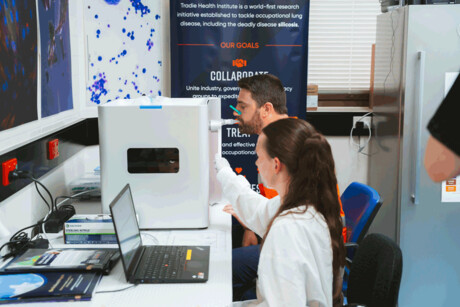
Introduced in Australia in 2024 and unlike current invasive diagnostic methods, the PExA (Particles in Exhaled Air) machine uses a simple breathing test to capture microscopic particles naturally exhaled from the very deepest part of the lung and is being used by researchers at The Prince Charles Hospital (TPCH) to investigate whether silicosis can be identified before irreversible lung damage occurs.
The proteins expressed in the particles captured could, researchers believe, reveal the earliest biological changes associated with silicosis, long before the disease can be detected through existing testing. “Our research has the potential to reshape how these conditions are identified, monitored, treated, and ultimately prevented,” said TPCH Senior Thoracic Physician and Queensland Lung Transplant Service (QLTS) Head of Research Dr Dan Chambers.
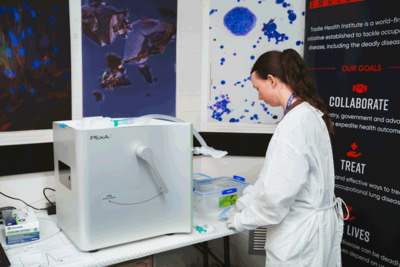
The project is supported by The Prince Charles Hospital Foundation through its Tradie Health Institute initiative. “What excites me is not just better diagnosis, but the possibility of earlier intervention,” Chambers said. “If we can identify disease at a much earlier stage, we have a real opportunity to change outcomes for workers and their families.”
Until now, researchers have relied on a machine on loan from Sweden. However, industry investment will enable the purchase of Australia’s first dedicated PExA machine, ensuring ongoing access to the technology and allowing the research program to expand. Support has included a grant from Brisbane construction company CPB Contractors, which has contributed $300,000 over three years to this next phase of research.
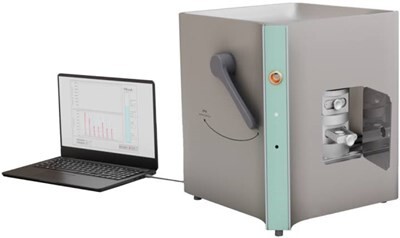
“Support from industry has allowed us to explore the full potential of the PExA technology and accelerate research that could ultimately benefit workers across Australia,” QLTS Researcher Kiara Knuckey said. “This could completely change what early detection looks like in practice.”
Silicosis is frequently diagnosed only after significant and irreversible scarring has developed within the lungs, despite stronger workplace protections and growing awareness. “The idea that we may one day identify disease before symptoms appear is incredibly powerful,” Knuckey said.
RAINE plastic frame prescription safety glasses
RAINE plastic frame prescription safety glasses are designed to be high-performance balanced...
CARVE Safety Eyewear range
Designed for Australian worksites and everyday trade environments, the CARVE Safety Eyewear range...
CenTrak Bluetooth Low Energy (BLE) Multi-Mode staff badge
The CenTrak Bluetooth Low Energy (BLE) Multi-Mode staff badge is an RTLS duress solution designed...