Has this Norwegian scientist found the safety–comfort balance in protective footwear?
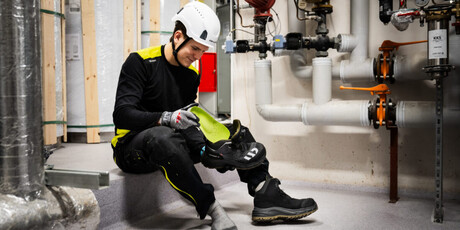
With 20,000 measurements analysed, a Norwegian industrial designer and senior research scientist has collaboratively developed a concept that, he says, turns the way protective shoes are produced upside down.
Keeping feet and toes safe against impacts and crushing injuries, corrosive chemicals and punctures from sharp objects is a requirement of protective footwear, with workers needing to be able to trust that they don’t risk injury if, for example, they step on a nail. Yet, individuals who kneel or stand through long workdays should also be able to avoid aching hips and knees due to stiff and rigid footwear, which highlights the challenge in finding a balance between safety and comfort.
The project is named Lightfoot; it ran between 2022 and 2025 with 20,000 measurements analysed. The protective shoe concept sees users select safety footwear according to their weight class, the flexibility they want and the tasks they have to perform, and has been developed by Tore Christian Storholmen, industrial designer and senior research scientist at SINTEF, which contributed the research methodology.
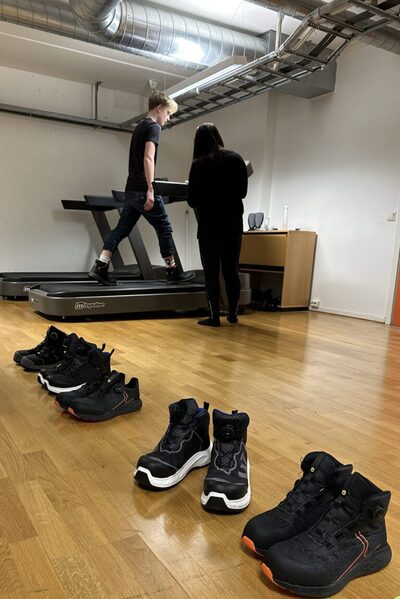
Storholmen collaborated with the Norwegian company Wenaas Workwear, which supplies protective clothing and safety equipment to the Norwegian market. The shoes are manufactured by the Italian company Orion. “We’ve collaborated closely with the manufacturer in Italy, who has had to completely rethink the production method,” Storholmen said. “They have been producing safety shoes for 40 years and say they have never seen anyone tinker with so many elements at once.”
The manufacturer, end-user and industry partner collaboration saw a protective shoe developed with a softer sole that minimises strain on the heel and provides better space for the toes when kneeling. “The classic way to make shoes has been to inject foam into a mould that connects the outsole to the finished upper of the shoe,” Storholmen said. “The problem has been that the nail protection needs to be inserted on top of this midsole and usually consists of a thick, strong textile material. It rests on top of the foam that you’ve injected, ruining the comfort.”
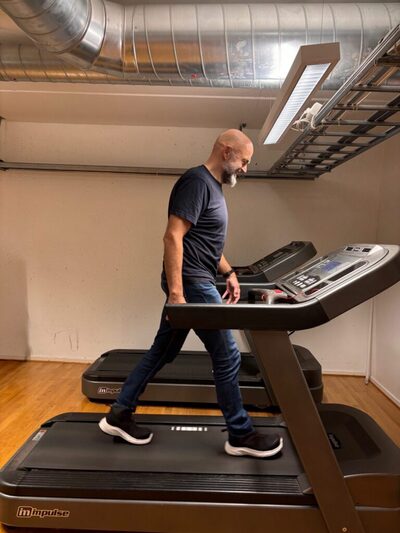
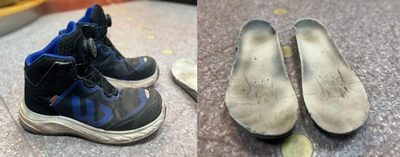
Lightfoot researchers tried placing a traditional insole on top of the nail protection. “But it’s pretty thin,” Storholmen said. “So we realised that if we were going to be able to do something about the shock absorption and ergonomics, we had to change the entire production method.” Placing the nail protection in the bottom of the shoe, the researchers removed the foam layer, left the shoe an empty shell and introduced replaceable midsoles with different degrees of firmness.
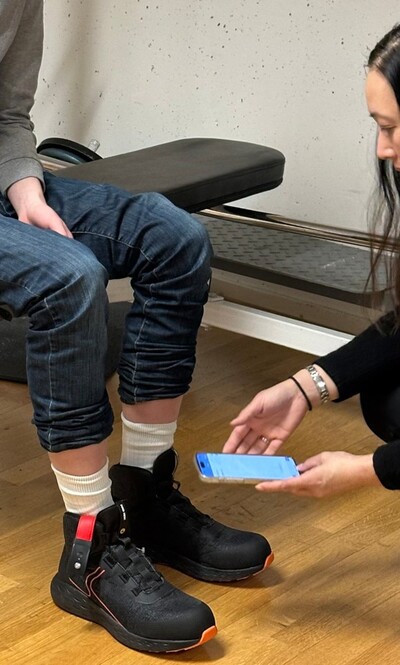
The shoe type developed was found to provide better shock absorption during natural walking when compared with a representative selection of established safety footwear models on the market today, including the supplier’s own reference model. The replaceable midsoles “are much thicker than traditional insoles, as much as three centimetres at the heel. This way we move the soft materials closer to the foot, and people can choose the sole based on their own weight class and needs,” Storholmen said.
“We achieved a significant reduction in heel forces and significantly better foot stability. The forces acting on the heel have been reduced by over 6%,” Storholmen said.
Regarding the 6% reduction in forces acting on the heel, Storholmen said that while it might not sound like much, for a person weighing 80 kilos, it corresponded to five kilos less load for every single step they take. This can amount to several tonnes less total load on the body over the course of a work day. Storholmen also said that workers in offshore and land-based industries have tried out the shoes over several months, with their feedback confirming the laboratory study.
“Our trial users have reported improved comfort. One user said that for the first time in over 10 years he was able to stop taking painkillers due to the pain in his knees and joints,” Storholmen said. Yet, Storholmen also acknowledged that the connection between footwear, ergonomics and musculoskeletal disorders is complicated. “We’re talking about quite complex causes, and we haven’t yet done long-term studies,” Storholmen said.
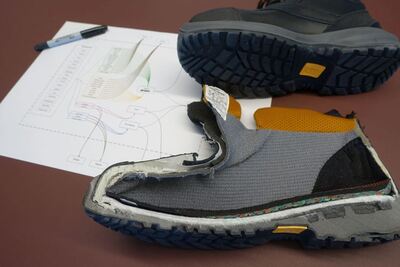
“But these are people who walk 10 to 20 thousand steps a day, and good safety footwear can reduce the impact load. We are already seeing that it is possible to reduce the load, and over time this will have an impact,” Storholmen said, adding that the project would not have been possible without its interdisciplinary design.
Aker BP, Equinor and OneCo were also partners in the Lightfoot project, which received support from the Research Council of Norway, the results of the project being, Storholmen said, primarily based on a data-driven approach. “We have involved researchers in physiology, biomechanics, industrial design and data analysis,” Storholmen said. “This approach is key when working with an industry that is as set in its ways as this one. You have to see things from different perspectives to find solutions.” You can learn more about the project at www.sintef.no/en/projects/2022/lightfoot.
The fire-protection potential of mycelium leather
Made from fungal networks cultivated using agricultural waste and water, could this wildfire...
The day after certification: why the right glove can become the wrong glove
A glove may be certified once, but it is tested by the work every day. Here's why safety...
Could Australia's use of this machine identify silicosis before damage occurs?
Introduced in Australia in 2024, the machine uses a simple breathing test to capture microscopic...