Is operator competency keeping pace with EWP technology?
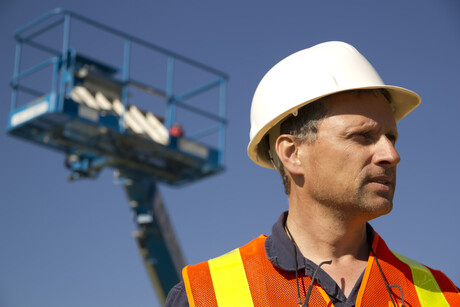
When it comes to workplace safety, it’s easy to think of EWP operator competency as a box that can be easily ticked: the worker has completed the required training, holds the relevant evidence of competency, and is therefore ready to operate. But, as EWPA National Training Manager NICOLAS CHIEW explains, EWP competency is not a one-off achievement.
For elevating work platform (EWP) operator competency, ongoing evaluation is necessary — there are factors such as changes in machine types and configurations, increasingly sophisticated safety features, developments in work practices and updates to the standards that guide their design and safe use.
So, it is important for employers, supervisors and operators to know if their understanding of competency is keeping pace.
Competency is more than operating the controls
A competent EWP operator needs practical knowledge and judgement, not just familiarity with the control panel — and this skill starts before the machine is switched on.
Operators need to understand whether the equipment selected is appropriate for the task and the environment. They need to recognise the machine’s capabilities and limitations, including rated capacity, operating envelope (where, how and under what conditions the machine can safely operate), ground conditions and wind restrictions.
They also need to understand the hazards associated with the specific worksite. An operator who can competently manoeuvre a scissor lift in one environment cannot automatically be assumed to have the same level of competency when presented with a different machine, a different worksite or a substantially different task.
This is particularly important because EWPs are not a single category of machine. Different types require different knowledge and skills. The training framework used by the Elevating Work Platform Association (EWPA), for example, distinguishes between machine types including vertical lifts, scissor lifts, self-propelled boom lifts, trailer lifts, truck-mounted lifts and advanced booms.
Essentially, operator competency needs to match the equipment, the task and the environment.
How technology changes the competency calculations
Modern EWPs incorporate increasingly sophisticated safety systems and controls. These can provide important additional layers of protection, but they also mean operators need to understand what the technology is designed to do, and what it’s not.
A safety feature should never replace operator judgement. As new technologies are introduced, operators need to understand new warning systems, interlocks, sensors, load-management functions, secondary guarding systems and other machine-specific features. They need to know how these features affect operation and what action is required when a warning or fault occurs.
This is where familiarisation becomes critical. An operator may have extensive experience with one machine type but still require familiarisation before using a different model or configuration. Knowing how one machine behaves does not necessarily mean knowing how another machine will respond. This is why the operator’s manual remains an essential source of information for the equipment being used.
Getting across changes to standards
The operating environment is also changing, including updated Australian Standards. In 2025, AS/NZS 1418.10 was revised, addressing requirements for the design, construction and maintenance of mobile elevating work platforms (MEWPs). AS 2550.10:2025, covering the safe use of MEWPs, was also released. The latter includes requirements and guidance relating to safe systems of work, planning, selection, operation and maintenance.
The significance of these changes is not that operators suddenly need to become standards experts, but it does reinforce a broader point: that the knowledge underpinning safe operation is not static, it’s evolving.
When standards, equipment and accepted work practices are updated, organisations need mechanisms for identifying what has changed and to determine whether their people need additional information, familiarisation, training or assessment.
The EWPA’s own training program has evolved for precisely this reason, with updates in response to changes in equipment, technology and the revised standards, with greater emphasis on machine categorisation, major hazards and newer safety technologies.
**************************************************
6 questions to ask to ensure ongoing EWP competency
For employers and supervisors, maintaining competency should be an ongoing process rather than an event. There are several practical questions worth asking:
1. Is the operator trained for the machine type?
Evidence of training should be appropriate to the equipment being operated. Different categories of EWP have different operating characteristics and hazards.
2. Has the operator been familiarised with the specific machine?
Even experienced operators need machine-specific familiarisation. Controls, layouts, emergency systems and safety features vary between machines.
3. Can the operator identify and manage hazards before starting work?
Competency includes the ability to assess the work area, identify hazards and implement appropriate controls. This can include overhead obstructions, electrical hazards, ground conditions, traffic, weather, other plant and people working nearby.
4. Can the operator conduct an effective pre-start inspection?
A pre-start inspection should not be treated as a box-ticking exercise. Operators need to understand what they are checking, identify defects and know when equipment should be removed from service.
5. Does the operator understand emergency procedures?
Knowing how to operate an EWP in normal conditions is only part of the job. Operators and relevant personnel on the ground need to understand emergency lowering and rescue arrangements. A workplace must have a plan for what happens if the operator becomes incapacitated or the machine cannot be operated normally.
6. Can the activities around the machine be safely managed?
Competency extends beyond the actual operation of the EWP. Loading and unloading, transportation, positioning, setting up and securing equipment can all introduce hazards and require appropriate knowledge and procedures.
**************************************************
Employers and supervisors play a key role
It’s important not to place the entire burden of competency on the operator. Safe EWP operation is a shared responsibility. Employers, for example, are responsible for ensuring people are appropriately trained, familiarised and supervised. They also need to consider whether workers’ skills remain appropriate when equipment, tasks or workplace conditions change.
Supervisors have a particularly important role. They need to understand the equipment being used, the risks associated with the work and whether the people involved have the knowledge and skills required for the job. This includes being able to identify unsafe work practices on live worksites in, often times, complex environments.
A Verification of Competency (VOC), when appropriately designed and conducted, can provide evidence that a person’s practical ability remains suitable for the equipment and task. However, a VOC should not be confused with training or treated as a replacement for appropriate formal training.
Training providers also have an important role in keeping content current and ensuring assessment reflects real-world risks and the latest equipment.
Make competency a living process
There is a simple change that workplaces can make: instead of asking, “Has this person been trained?”, ask, “Can we demonstrate that this person is currently competent for the equipment, task and environment they are being asked to work in?”
This encourages workplaces to consider refresher training, familiarisation, competency verification and supervision when appropriate. It also encourages operators to recognise that experience alone does not guarantee competency.
The EWPA Good Practice Guide recommends regular refresher training, with the interval between training sessions not exceeding five years.1 But competency should not simply be revisited when a card expires or a scheduled refresher becomes due.
Changes in machinery, worksite conditions, roles or procedures can create a need for additional learning well before a formal renewal point. The safest approach is to treat competency as something that must be actively maintained.
Technology will continue to change. Standards will continue to be reviewed. Workplaces will change. The challenge for industry is to ensure the people operating and supervising EWPs continue to develop their knowledge base along with them.
Genuine competency is not demonstrated by having operated a machine before; it’s demonstrated by having the current knowledge, practical skills and judgement to operate the right machine, in the right way, for the task and conditions at hand.
1. EWPA Good Practice Guide https://ewpa.com.au/resources/good-practice-guide
Roof anchor points: getting inspection and recertification right
Falls from height numbers have barely moved in a decade, and explain why the roof anchor point...
Mobile elevating work platform training program gets an upgrade
It's in response to revised Australian Standards for the manufacture and operation of mobile...
'Stanley the cone' targets three common workplace hazards
Between April and December 2026, SafeWork SA's Stanley the cone campaign will provide advice...