Electric shock fine increased six-fold on appeal
After pleading guilty to a single charge of failing to provide a system of work that would reduce or eliminate the risk of electric shock, in October 2025 a civil construction company was fined $15,000 without conviction in the Dandenong Magistrates’ Court.
However, following an appeal, on 22 May the Melbourne County Court set aside the original sentence, convicting the company and ordering it to pay a $90,000 fine and $4064 in costs.
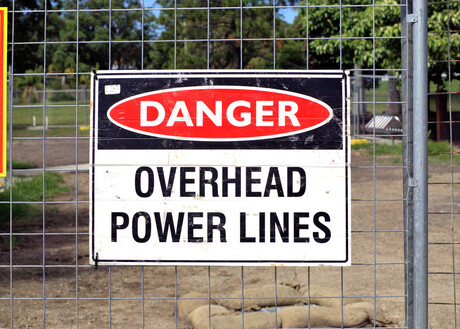
The incident occurred in March 2024 when the company’s workers were digging a bore shaft beneath overhead powerlines as part of construction works on a housing estate in Pakenham.
While measuring the depth of the shaft, the court heard that a worker lifted a seven-metre aluminium pole over his shoulder, either touching the lines or getting close enough to cause an arc flash.
The electric shock resulted in lost consciousness, significant burns requiring skin grafts to his feet, a toe amputation and removal of tendons. WorkSafe Victoria had previously provided guidance to the company on the risks associated with no-go zones and working around powerlines, the court heard.
It was reasonably practicable, the company admitted, to ensure workers adhered to a three-metre exclusion zone between overhead powerlines and any handheld objects.
“Before any work on a site with live powerlines it’s critical to identify hazards and eliminate or control all of the risks, including risks to workers using tools capable of conducting electricity,” WorkSafe Victoria Chief Health and Safety Officer Sam Jenkin said.
“Electric shock can happen even if equipment doesn’t actually touch the powerlines — as electricity can arc to nearby vehicles, machinery, or even equipment such as poles or conductive tools.”
To avoid contact with powerlines, WorkSafe Victoria advised that employers and contractors using trucks and other mobile plant or conductive equipment should:
- Identify all powerlines on site and at site entrance or exit points.
- Comply with the No-Go-Zone rules and spotter requirements when operating mobile plant around powerlines.
- Monitor weather conditions closely — powerlines can sag in extreme heat and sway in strong winds.
- Be aware that powerlines are more difficult to see at dawn and dusk.
- Designate travel paths, loading and unloading areas well away from powerlines.
- Install warning signs or other visual indicators on each side of the powerline to warn operators and drivers.
- Consider the type and height of heavy vehicles, plant, machinery and equipment and if it can safely operate near the powerlines.
- Induct drivers and operators in the risks of powerlines onsite, and the controls in place to prevent hitting the powerlines.
- If routinely working near powerlines consider engineering controls such as presence-sensing systems that can detect powerlines and interlock plant movements.
- Consult with workers on safe systems of work for working near powerlines.
For more information, visit Energy Safe Victoria’s Look up and live webpage.
John Holland charged over Sydney Metro tunnel works serious injuries
The single Category 2 offence carries a maximum penalty of $2.32 million and relates to an...
$300K fine after contact with powerlines results in electric shock
A company has been fined $300,000 following a 16-metre cage that buckled and fell onto two...
'Shocking statistics' prompt SA powerlines safety message
SA's electricity distributor and WHS regulator have used so-called 'shocking...