The hidden safety net in power distribution: when good people compensate for ineffective systems
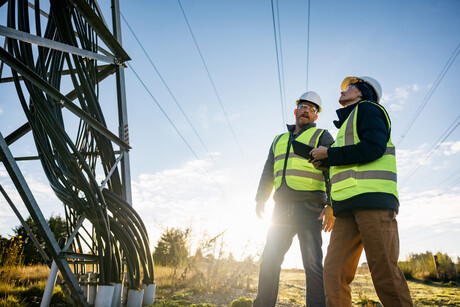
The job was completed safely. The plan worked. The procedure was followed. Or did it only appear that way? Across the power distribution industry, experienced workers routinely adapt when plans are incomplete, procedures are difficult to follow, equipment is unavailable, resources are stretched or conditions change unexpectedly. Despite these challenges, they get the job done safely, drawing on their knowledge, judgement and teamwork, constituting — as REBECCA BOEHM, Senior Manager, and SAM FRASER, Market Director for ANZ, at dss+ explains — a hidden safety net.
Most of the time, worker adjustments go unnoticed. The work gets done, though sometimes inefficiently: it slips to the next shift or costs more than planned. Usually, no one gets hurt. As a result, leaders conclude the system worked as intended. In reality, the workforce made the system work.
And here’s the problem: it’s not only planning and operations leaders who may not see how much frontline teams are compensating. The safety function may not know this safety net exists either, because the adjustments that make safe work possible are rarely captured in traditional safety data.
This is becoming a bigger issue as the power distribution industry navigates significant change. As the energy transition accelerates, organisations are encountering new technologies, changing network configurations, distributed energy resources and evolving ways of working. At the same time, many businesses are also losing experienced workers whose knowledge and judgement have helped compensate for shortcomings in planning, procedures and work design.
So, what happens when those people are no longer available — or the complexity of the work exceeds their ability to compensate?
Human adaptability will always be important
In safety, we rightly seek to eliminate hazards, engineer better controls and design failure-resistant systems wherever possible. However, human judgement remains critical to the success of complex operational work.
This is particularly true in power distribution, where work is frequently undertaken in dynamic and dispersed environments. Crews may encounter changing weather, incomplete asset information, network constraints, access problems, interactions with contractors or the public, and differences between documented and actual site conditions.
The challenge is to ensure organisational performance does not depend on workers routinely compensating for weaknesses that could and should be addressed through better system design, planning, learning and operational control. At the same time, organisations must build the culture, capability and confidence required for people to adapt appropriately, challenge assumptions and stop work when conditions demand it.
Many organisations know when a job goes wrong. Far fewer understand how much effort was required to make a difficult job successful. As long as frontline adaptations remain invisible, organisations will struggle to learn, improve and create resilience.
**************************************************
For leaders, the question is:
How can we uncover the workforce adjustments it took to get the job done, and use those insights to strengthen our systems?
**************************************************
Look beyond the outcome to understand how work gets done
Every workaround, adjustment and adaptation contains critical information. But much of that information never reaches the people responsible for improving organisational systems.
The clues sit in the organisation’s planning and operational data. Variances, recurring delays, resource constraints and regular rework all point to where frontline teams are compensating for system weaknesses.
Yet many organisations lack the operational KPIs and management routines needed to consistently identify and review these variations. Where they do exist, the focus is usually on productivity and efficiency.
**************************************************
Leaders need to look behind a green dashboard and find out:
- What adjustments did the team make to complete that work?
- Which of those adjustments could be operationalised?
**************************************************
These questions need to be asked as part of normal operational conversations, not just when something goes wrong. Pre-start discussions, field engagement, work reviews and meetings all provide opportunities to identify business process improvements.
So, what does this mean for safety?
Each of those adjustments is also a safety signal. A job that runs late, a crew working around missing equipment or a plan that doesn’t match site conditions all change the risk of the work, even when no one gets hurt. Yet this evidence rarely appears in the data that safety functions traditionally own and analyse. And when operational data is reviewed, the conversation seldom turns to what it reveals about safety.
That’s why the safety function must look beyond traditional safety data and work with planning, operations and business improvement teams to uncover and systemically resolve what is currently hidden.
Build a culture that makes this possible
For this to become part of business as usual, everyone must feel safe to question decisions, raise concerns, discuss mistakes and highlight process weaknesses. People need confidence that their concerns will be heard and supported, particularly when work is behind schedule or when they challenge an established way of doing things.
Strong crews often develop high levels of trust and teamwork. They solve problems together, protect one another and find ways to achieve the work despite obstacles. If leaders consistently reward heroic recovery, firefighting and problem-solving under pressure, they will unintentionally reinforce the very conditions creating the need for those behaviours.
However, if leaders can create an environment where these crews are empowered and recognised for challenging and improving the systems, such crews can provide powerful insights to help shape process improvement.
The objective is to move from accepting variation as normal to identifying it, learning from it and improving together.
Turn frontline insights into stronger systems
Once adaptations are visible, that knowledge can be used to identify recurring weaknesses and enhance how work is planned, controlled and performed.
Many organisations already have the components of an Operational Management System: the routines, roles, KPIs, governance and information flows through which the organisation plans work, manages performance, identifies deviations and acts. But these components are often disconnected rather than functioning as a learning system. As a result, organisations can become highly capable at responding to immediate issues but struggle to identify and eliminate the underlying causes of recurring problems.
A strong Operational Management System should capture learning from operational experience, escalate recurring barriers, planning failures and control weaknesses, and track improvement actions to completion. It should also monitor whether critical controls are working in practice and promote discussions beyond basic outcome measures.
The safety function needs to rapidly upskill itself to understand what a good Operational Management System, quality routines and business improvement processes look like — and leverage AI solutions to triangulate across safety and operational data sets.
As experienced workers leave, these systems are how their knowledge stays in the business. Experience will always matter, but critical risk management should not depend on experience alone.
Make the hidden safety net visible
The most resilient organisations have high-quality people who apply judgement to execute complex operational work safely. But their people are no longer the hidden safety net. The adaptations and insights generated in the field are visible, understood and used to drive systemic improvement.
**************************************************
Becoming resilient requires leaders, including the safety function, to ask different questions:
- What did workers have to adjust, overcome or compensate for?
- Which of those adaptations reflect the necessary application of human judgement and which point to weaknesses the organisation could address?
- How will we use this information to improve procedures, strengthen controls and reduce our dependence on individual experience?
**************************************************
In a period of workforce transition, industry transformation and growing operational complexity, that organisational ability to surface the invisible, learn and adapt may become one of the most important determinants of future safety performance.
Electric shocks — many affected likely never trained to work around electricity
This is according to analysis of Victorian coroner-reported deaths, ED presentations, hospital...
Making EEHA inspections smarter: mobile and AI tools
Electrical Equipment in Hazardous Area inspections are essential for maintaining safety and...
Reducing hazards around powerlines
Powerlines pose a serious safety hazard on work sites and have caused many deaths and accidents...