Electric shocks — many affected likely never trained to work around electricity
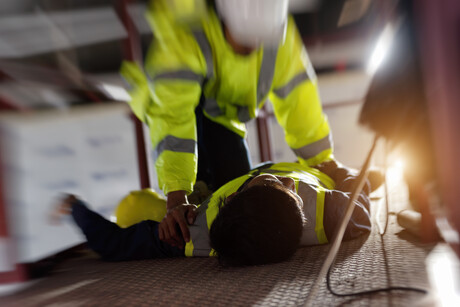
An analysis of Victorian coroner-reported deaths, ED presentations, hospital admissions and workers compensation claims between 2018 and 2024 suggests electrical training reforms are needed.
Dr Dee Tomic — from the Monash Centre for Occupational and Environmental Health at the School of Public Health and Preventive Medicine — is calling for better electrical hazards training to address the serious burden of workplace electrical injury. This follows a study, on which Tomic was lead researcher, published in October 2026 in Australian and New Zealand Journal of Public Health.
Manufacturing workers were found to account for around one in five of the 285 accepted workplace compensation claims lodged for electrical injuries in Victoria between 2018–19 and 2022–23, while accounting for 16.1% of these claims was construction, which includes electrical services.
By occupation, the research also found that, at 16.5%, electrotechnology and telecommunications trades workers lodged the most electrical injury claims, which was followed closely by labourers such as freight handlers and shelf fillers, at 13%. A finding of the study, Tomic said, being that many of those affected had likely never been trained to work around electricity.
“There is an assumption that electrical injury is an electrician’s problem, but a large share of these injuries are happening to workers who have most likely never been trained to work around electricity,” Tomic said. “Electricians are exposed more often, but they also work within stricter safety systems.
“Other workers may encounter live electrical equipment unpredictably and without that protection, which really highlights the need for improved training to prevent further injury.” In Victoria, between 2018–19 and 2023–24, the study found 2516 ED presentations and 313 hospital admissions for work-related electrical injuries were recorded.
It was also found that men accounted for 81.7% of ED presentations and, at 21.6 per 100,000 workers, workers aged 15 to 24 years had the highest ED presentation rate. As none of the administrative datasets used were designed to capture electrical injury specifically, so cases may be missed where the injury was not correctly attributed, Tomic made the point that the figures are likely to underestimate the true burden.
That the four data sources are also unlinked meant the same worker may appear in more than one dataset and the counts cannot be added together. “Linking these data sources, and capturing the circumstances in which each injury occurs, would give us a much clearer picture of where safety systems are breaking down,” Tomic said.
“While electrical injuries are less common than many other workplace injuries, they are associated with disproportionately severe outcomes, including burns, cardiac and neurological complications, and death,” Tomic said. “Almost all workplace electrical injuries are preventable. This is something that we can and absolutely should address, because everyone deserves to come home from work safe and unharmed.
“Workplace safety regulators and policy-makers must do better by those who work around live electrical equipment,” Tomic added. Commenting on the research, Adjunct Professor Terry Slevin, Public Health Association of Australia Chief Executive Officer, said:
“This data is unlikely to be unique to Victoria and highlights a national problem … An expansion of the reach of training on working safely around electricity must be a priority across all industries, including those not traditionally seen as high risk.”
The study was published open access and you can read it at doi.org/10.1016/j.anzjph.2026.100586.
Making EEHA inspections smarter: mobile and AI tools
Electrical Equipment in Hazardous Area inspections are essential for maintaining safety and...
Reducing hazards around powerlines
Powerlines pose a serious safety hazard on work sites and have caused many deaths and accidents...
Top tips: selecting underground LED strip lighting
MineGlow shares five crucial insights to mitigate electrical risks and uphold safety standards...