Death in strong winds prompts safety warning
Powerful winds have injured or killed two workers in NSW during August.
The first incident occurred at Talinda Street, in Carlingford, with a male worker suffering fatal injuries when a wall collapsed at the site.
The second incident occurred on Thomas Boulton Crescent, in Kellyville, where a wall fell on a worker and caused serious injuries.
Businesses are being reminded by SafeWork NSW to ensure that their workers and the community are kept safe during strong winds.
Inspectors have responded to both incidents and investigations have commenced.
The executive director of SafeWork NSW, Peter Dunphy, said businesses needed to consider all hazards when working in strong winds so that workers and the community do not suffer injuries.
“Wet conditions can be a factor in workplace incidents for those working outdoors, particularly scaffolds on construction sites,” Dunphy said.
“High gusts of wind are unpredictable and cause a range of serious workplace hazards associated with flying objects and an increased risk of structural collapse.”
Wind speeds are often stronger at heights, so operating cranes or using platforms requires additional caution. In addition, side loads such as wind or materials leant against a wall under construction can cause a wall or scaffolding to collapse.
“It’s essential businesses conduct a site-specific risk assessment and site controllers talk with workers to ensure adequate planning and preparation is in place so that all hazards are managed,” said Dunphy.
SafeWork NSW recommendations for working in windy conditions:
- Ensure freestanding masonry walls are stable and adequately braced.
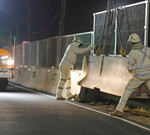
- Establish exclusion zones around incomplete masonry walls in extreme weather.
- Wear eye protection to protect eyes from dust and debris.
- Examine structures to ensure they will remain standing during strong winds.
- Secure objects that can become airborne, including stacks of materials.
- When working at heights, ensure adequate fall prevention is in place.
Builders and developers also have a responsibility to secure unattended construction sites.
“There are a number of things builders and developers can do to make their unattended sites safe, including ensuring power is off; clearing debris; blocking access to elevated floors, scaffolding and ladders; and storing plant and equipment, tools, chemicals and dangerous goods securely,” Dunphy said.
“They should also empty water drums, cover pits, trenches and pier holes, and erect appropriate signage, including an after-hours contact number.”
National Safe Work Month calls for action in its final week
As National Safe Work Month draws to a close for 2026, this week's theme encourages...
National Safe Work Month looks to the future in Week 3
The week three theme of National Safe Work Month encourages workplaces to consider how...
Week 2 of National Safe Work Month broadens focus to long-time health outcomes
Entering its second week, the theme is 'For health: What WHS protects' —...