Ready for the New WEL Environment: Protecting Workers Starts with the Right Respiratory Protection Partner
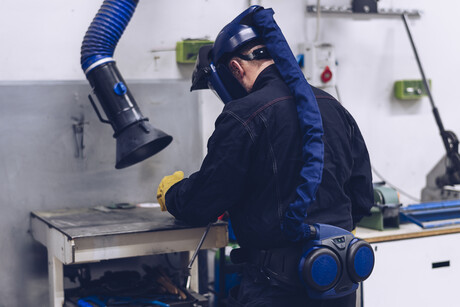
From 1 December 2026, Australia’s revised Workplace Exposure Limits (WELs) will place greater emphasis on how organisations identify, assess and control airborne hazards. For safety managers, this is more than a compliance update. It is an opportunity to review respiratory protection programs and ensure workers are receiving effective protection against the long-term risks associated with airborne contaminants and chemical exposure.
Across industries including construction, manufacturing, mining, utilities, waste management, remediation and industrial maintenance, workers are routinely exposed to dusts, fumes, mists, gases, vapours and biological contaminants. While many of these hazards are invisible, their impact can be significant. Unlike acute injuries, respiratory illnesses often develop gradually over years of exposure, making prevention critical.
As awareness of occupational lung disease grows and regulatory expectations increase, respiratory protection can no longer be viewed as a simple purchasing decision. The focus must be on ensuring workers return home healthy today while protecting their long-term wellbeing.
The Cost of Cutting Corners
When budgets are under pressure, it can be tempting to treat respirators as a commodity purchase. However, not all respiratory protection solutions deliver the same level of performance, comfort, durability or support.
Lower-cost alternatives may provide short-term savings, but they can also introduce uncertainty around protection levels, user compliance and long-term reliability. For safety professionals, the question should not be “What is the cheapest option?” but rather “What is the most effective solution for protecting our workers?”
The answer matters because we only get one set of lungs.
With the revised WEL framework raising expectations around airborne hazard management, organisations need confidence that their respiratory protection programs are capable of meeting both current and future requirements.
Why an Integrated Respiratory System Makes Sense
Many organisations have accumulated multiple respirators, filters and accessories over time to address specific workplace hazards. While each solution may perform adequately on its own, managing several respiratory platforms can create unnecessary complexity.
Different filters, maintenance requirements, spare parts inventories and training programs can increase costs and create opportunities for mistakes in equipment selection and use.
Sundström addresses this challenge through a modular, integrated respiratory protection platform. Rather than offering standalone products, the Sundström range has been engineered as complete systems where half masks, full-face respirators, powered air-purifying respirators (PAPRs), hoods, helmets, airline systems and filters work together seamlessly.
This system-thinking approach allows organisations to standardise respiratory protection across multiple applications while maintaining the flexibility to adapt to changing hazards. Instead of purchasing entirely new systems as requirements evolve, businesses can often reconfigure existing equipment using compatible components, reducing complexity and lowering lifetime ownership costs.
A key example is the Sundström SR510 P3 particulate filter, which can be used across the SR100 Half Mask, SR200 Full Face Respirator and Sundström SR500 PAPR and SR700 PAPR systems. This cross-platform compatibility simplifies inventory management and training while delivering high-performance protection where it is needed most. The benefits also extend to long-term cost savings because components are designed to work across multiple configurations, businesses can avoid purchasing separate respiratory systems for every application. Existing equipment can often be upgraded or reconfigured using compatible filters, accessories, facepieces or powered air systems rather than being replaced entirely.
Ready for WEL 2026: Why is Sundström the brand of choice?
More Than a Product: Expert Guidance Every Step of the Way
While quality equipment is essential, effective respiratory protection requires expert support before and after purchase.
In Australia and New Zealand, Sundström is supported by Safety Equipment Australia (SEA), the authorised wholesaler and respiratory protection specialist behind the brand. SEA works closely with distributors, safety managers and end-users to help ensure workers are equipped with the most appropriate respiratory protection for the hazards they face.
Sundström products are available through an extensive network of authorised resellers across Australia and New Zealand, allowing organisations to source respiratory protection locally. Customers can find their nearest authorised reseller using the Store Locator on the SEA website.
Importantly, SEA’s support extends well beyond product distribution. For example, when products are purchased through a reseller, customers continue to have access to SEA’s technical expertise and respiratory protection knowledge. SEA specialists can assist with identifying suitable respiratory systems, selecting the correct filters, understanding contaminant-specific requirements and ensuring equipment is matched appropriately to workplace exposures.
As organisations prepare for the revised WEL environment, expert guidance becomes increasingly valuable. Selecting an inappropriate respirator or filter can compromise protection and leave workers vulnerable to exposure. SEA’s technical support helps safety managers navigate these complexities with confidence, ensuring respiratory protection programs align with workplace risks and regulatory expectations.
SEA also provides ongoing after-sales support, including assistance with maintenance, repairs, replacement parts and troubleshooting. Because Sundström products are designed to be repaired rather than discarded, components such as valves, membranes, harnesses and seals can be replaced individually, extending product life and maximising return on investment.
Protecting What Matters Most
The upcoming WEL changes serve as an important reminder that respiratory protection is ultimately about protecting people.
Behind every respirator is a worker relying on that equipment to safeguard their health, both now and in the years ahead. By combining Sundström’s integrated respiratory protection platform with SEA’s technical expertise, ongoing support and commitment to helping customers select the right solution for every application, organisations can build respiratory protection programs that deliver confidence, compliance and long-term worker protection.
Because when it comes to respiratory health, there are no shortcuts.
We only get one set of lungs.
To find your nearest authorised Sundström reseller or learn more about respiratory protection solutions, visit www.sea.com.au.
NEW WHITE PAPER: Welding Fume Regulation Changes
Our latest white paper, Welding Fume Exposure in Australia – 2026 Regulatory Changes &...
SmallTalk®: Clear Communication Without Compromising Respiratory Protection
Effective communication should be treated as part of the PPE system — not as an optional...
Raising the Standard: Why Advanced Respiratory Protection Matters More Than Ever
Respiratory health is rapidly becoming one of the most critical challenges facing Australian...