$575K fine after 750 kg wheel assembly fell on apprentice mechanical fitter
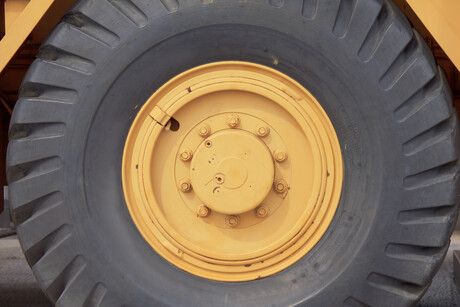
A mining company has been fined $575,000 (and ordered to pay $2663.30 in costs) after an apprentice mechanical fitter became a paraplegic when a wheel assembly fell on him. The apprentice, who was 18 years old at the time of the incident (in September 2021), was performing work for the company under a labour hire arrangement and under the supervision of a company-employed heavy diesel mechanic in the Matilda Gold Open Pit site’s mechanical workshop.
The apprentice and the mechanic were replacing two of the wheel assemblies on an articulated dump truck on the day of the incident. A telehandler was used to lift the first assembly off the truck, after which the mechanic placed it on the ground and asked the apprentice to retrieve the washers that had fallen inside its rim.
Without securing the assembly to the telehandler, mechanic transferred it upright to a nearby tyre storage rack. The mechanic used the telehandler about 30 minutes later to remove the second assembly but kept it upright on the machine’s tines rather than placing it on the ground.
The apprentice, who had been observing the procedure nearby, then received a gesture from the mechanic to walk in front of the telehandler and retrieve washers from inside the assembly’s rim. The unsecured assembly fell forward as the apprentice reached into the rim, striking and pinning him to the ground.
The telehandler was used by the mechanic to lift the assembly and free the apprentice, the mechanic asking another worker to call for medical assistance. About 15 minutes later, an ambulance arrived and transported the apprentice to a medical facility.
The company’s standard operating procedure for changing tyre and rim assemblies, at the time of the incident, directed workers to ensure that handled components did not pose pinning or crushing risks. It lacked, however, clear and specific instructions directing workers how to avoid or minimise these risks. The company amended its standard operating procedure after the incident by identifying further hazards, adding more safety requirements and appending a competency assessment.
The company also developed an additional procedure for the replacement of wheels on surface mining equipment. This additional procedure addressed exclusion zones, transportation protocols and injury risks. The contraventions of the company of the MSI Act were assessed as if the apprentice was a direct employee of the company.
“A young worker suffered a permanent spinal injury and became a paraplegic because the company responsible for their safety had an operating procedure for changing tyre and rim assemblies that was overly generalised and lacked direction,” WorkSafe WA Commissioner Sally North said.
“The circumstances of this devastating, life-altering incident were avoidable. This tragic case highlights that the only operating procedures that contribute to safety in Western Australian workplaces are those that provide clear and specific instructions.
“I encourage Western Australian employers to review their safety procedures and engage with their employees to ensure that every process is clear, specific and fit for purpose. Taking these steps is essential to preventing avoidable harm and safeguarding workers.”
The Work Health and Safety Commission’s code of practice: managing risks of plant in the workplace can be found here, via the WorkSafe WA website.
Defence charged over Royal Australian Navy base 60-tonne crane tip
The mobile crane operator was forced to jump from the cabin and workers nearby to run from the...
$1.1 million safety spend to follow forklift incident at Royal Australian Mint
After a coin blanking press weighing around three tonnes almost fell on a worker while being...
Defective lifting equipment death leads to record $1.75 million fine
The highest fine ever imposed under Western Australia's workplace safety laws has followed...