Simple safety solution for longstanding dilemma in underground mines
Australian manufacturer and engineering exporter Leussink has met calls for increased safety in a long-time problem area for the underground mining sector.
The Illawarra-based company, which services the mining, construction, rail and shipping, and smelting sectors (including work on other continents), designed and manufactured a simple and effective solution to all but eliminate injuries and danger from falling roof mounts that fix hydraulic systems.
Director of Leussink Jason Leussink says because the problem involved such a tiny component in an industry where giant-sized equipment is everywhere, the entire safety scenario around this relatively tiny piece was being overlooked.
“It all centred around the susceptibilities of a small lever that activates hydraulic power in the process needed to fix roof bolts, yet the traditional position of the control lever made it a potential trigger for accidents,” said Leussink.
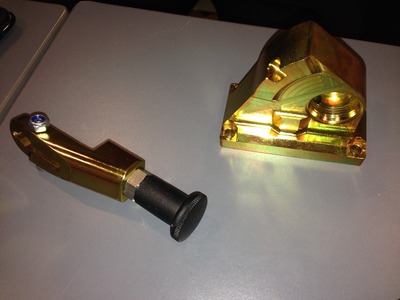
“What we did was look at the nature of the problem and devise the simplest solution to keep the lever where it normally is but to better ensure the safety of workers was heightened.”
The lever, which activates the hydraulics for power and operation in the process of roof bolting, is mounted on the hydraulic manifold.
Because underground mining operates on a relatively low ceiling height, this lever, for practical reasons, mounted on the manifold at leg level.
This always left the lever susceptible to accidental knocks and bumps by someone’s leg which would suddenly engage and activate the hydraulic valve and pump energy through the conduit.
In turn, this would cause a roof bolt to release which could fall down from the roof height and land on the finger, foot, or head of a worker and cause a severe crush injury, or even amputation.
Leussink engineered a completely new design which added a ‘safety lever’.
This is a spring-loaded safety lever which requires two different movements - one upward movement followed by a secondary, lateral movement, before it operates.
The moment the lever is released by the hand of the operator, it drops back safely into its ‘off’ position.
And, because this resting position is at lock, from now on any time it is bumped by the leg of an operator or other worker it will not unexpectedly engage.
Excavator operator fined following partial foot amputation
The operator, a sole trader and civil demolition contractor, was using the excavator to uproot...
ATSB Chief Commissioner publishes open letter on Sydney Airport investigations
The letter, by Angus Mitchell, sets out how the Australian Transport Safety Bureau is approaching...
Myer and supplier charged after robot warehouse fatality
The department store and a warehouse robotics supplier were charged after a 27-year-old man...