ATSB Chief Commissioner publishes open letter on Sydney Airport investigations
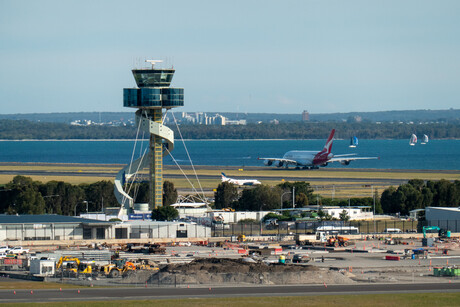
Following recent reports of traffic conflict and coordination incidents at Sydney Airport, the Australian Transport Safety Bureau (ATSB) Chief Commissioner Angus Mitchell has published an open letter explaining how the ATSB is approaching its six investigations into these matters.
“I understand the high level of public interest in these occurrences, particularly among travellers, aviation workers and the broader community, who all rightly expect Australia’s aviation system to operate safely and reliably,” Mitchell’s letter read.
“Foremost, I would like to stress that our highest investigation priority is incidents involving large air transport aircraft carrying fare-paying passengers. This priority directs our resources where there is likely to be the greatest public benefit.
“I want to assure the travelling public and those in industry that we are applying the ATSB’s robust investigation methodology: gathering the evidence carefully, testing it thoroughly, and preparing for the first series of preliminary reports to be released by the end of the month. These preliminary reports will be a publication of the facts we have established in the first weeks of the investigations.
“The desire for quick answers is entirely understandable. When incidents occur at a major airport, people want to know what happened, why it happened, and whether they can continue to have confidence in the system. But in transport safety investigation, speed cannot come at the expense of accuracy. Our ability to improve safety depends on evidence-based investigations that are comprehensive, defensible and trusted.
“Our investigators are continuing to retrieve and examine recorded data, including air traffic control communications and aircraft recorders where relevant. They are conducting interviews with flight, cabin, ground and air traffic personnel. They are reconstructing the timing and sequence of events, and the flow of information. And they are examining the safety defences in place during each incident.
“In all six incidents, safety defences operated in some form. Pilots, air traffic controllers or ground crews took appropriate action at a point in time, preventing more serious outcomes. That is reassuring, and it shows that important layers of defence were effective.
“However, that reassurance does not remove the need to understand why those interventions were required in the first place.
“These investigations will seek to provide assurance about the procedures in place at Sydney Airport for the movement of aircraft. They will also examine whether there were common operational elements in play at the time of the incidents, what is the significance, or otherwise, of six incidents in a short timeframe, and whether strengthening any specific parts of the system will reduce the risk of recurrence.
“Once the ATSB has established the factors leading to each incident, my priority will be to establish, or rule out, whether broader systemic safety issues that pose future risk may be present across these six investigations. We have not yet reached any such determinations.
“In aviation safety, events that almost happen — such as near collisions, conflicts and procedural breakdowns — invariably provide invaluable insights. They help identify what may be precursors to accidents. That is why investigating these incidents thoroughly and deliberately matters.
“Recent overseas airport-related accident investigations show a recurring pattern: where known procedural breakdowns are not addressed, the risk of a serious event increases significantly. Reassuringly, Australia’s strong commercial aviation safety record and culture means that such potential warning signs are not ignored.
“Robust safety systems are those that can accommodate human error because multiple safety defences are in place.
“No safety system is perfect. But the measure of a strong system is whether it keeps learning, strengthens its defences, and acts before warning signs become something worse. That is how transport safety is protected — and how public confidence is earned,” the letter concluded.
One such incident under investigation was a 9th August near-collision involving two passenger jets — a Jetstar A320 was taxiing prior to a planned flight to Gold Coast Airport when its flight crew observed a Qatar Airways Boeing 777, under tow from an aircraft tug, in close proximity on a crossing taxiway, as was reported to the ATSB. More information on this particular incident is available here.
Cleanaway charged over fatal truck and compactor crush at Sydney tip
Listed for mention on 20 October, the Category 2 offence charge under the WHS Act carries a...
Excavator operator fined following partial foot amputation
The operator, a sole trader and civil demolition contractor, was using the excavator to uproot...
Myer and supplier charged after robot warehouse fatality
The department store and a warehouse robotics supplier were charged after a 27-year-old man...