Managing hazards, not just controls: rethinking confined space safety
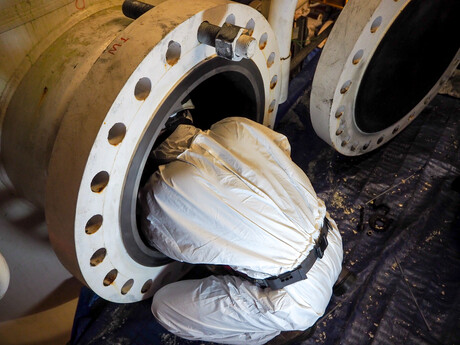
Confined space work remains one of the highest-consequence activities undertaken across Australian industry. Despite comprehensive legislation, Australian Standards and well-established permit systems, serious incidents continue to occur. Working at Height Association CEO SCOTT BARBER considers why.
Serious confined space incidents continue to occur, not because organisations lack procedures, nor because they don’t understand the importance of permits, gas testing or standby personnel. More often, it’s because the focus has shifted from managing hazards to managing controls.
While permits, atmospheric monitoring, isolation procedures and rescue plans are all critical components of confined space work, they are controls — they are the mechanisms used to manage risk. They are not the hazards themselves.
When organisations begin treating completion of those controls as the objective, rather than continually understanding and managing the hazards they are intended to control, confined space safety can become dangerously oversimplified.
A confined space is not a hazard, it is an environment. One of the most common misconceptions is to think of confined spaces as presenting a single, predictable risk.
In reality, a confined space is simply an environment where multiple hazards may exist, often simultaneously, and often changing throughout the work.
These hazards can include:
- oxygen deficiency or enrichment
- toxic or flammable atmospheres
- hazardous dusts and airborne contaminants
- engulfment by liquids or free-flowing solids
- mechanical, hydraulic, pneumatic or electrical stored energy
- moving plant and equipment
- biological hazards
- heat stress
- restricted access and egress
- communication difficulties
- challenging rescue environments
Importantly, these hazards rarely occur in isolation.
The work itself frequently creates new hazards. Welding changes atmospheric conditions. Cleaning introduces chemicals. High-pressure water mobilises contaminants. Maintenance activities alter ventilation, isolation and energy states.
Every confined space entry therefore presents a unique hazard profile.
The controls should be designed around those hazards, not simply repeated because they were effective on the previous job.
When productivity simplifies complexity;
✓ Modern industry rightly strives for efficiency.
✓ Shutdowns are carefully scheduled.
✓ Maintenance windows become shorter.
✓ Production targets continue to increase.
✓ Standardisation improves consistency and productivity across many operational activities.
However, critical risk work demands a different approach.
As confined space work becomes more routine, there is a temptation to standardise not only the administrative process but also the thinking behind it. Permits are completed because permits are always completed. Gas tests are conducted because they are required. Rescue equipment is staged because the procedure demands it.
Gradually, organisations can find themselves measuring whether the controls have been completed rather than asking whether the controls remain appropriate for today’s hazards.
This is where oversimplification begins.
Controls only work when they match the hazard.
A permit does not eliminate toxic gases.
A gas monitor does not prevent atmospheric change.
Ventilation is ineffective if it is designed for yesterday’s task rather than today’s.
Respiratory protection cannot compensate for poor hazard identification.
Every control has limitations. Its effectiveness depends entirely on how well it addresses the specific hazards present during the work. That requires continual hazard identification and dynamic risk assessment, not simply procedural compliance.
Safety leaders should therefore encourage a simple but powerful shift in thinking;
Rather than asking, “have all the controls been completed?”, ask, “have we identified every hazard these controls need to manage?”
It is a subtle distinction, but one that fundamentally changes decision-making. Leadership means managing uncertainty. No permit can predict every changing condition inside a confined space. Materials vary. Processes change. Weather influences atmospheric behaviour. Equipment ages. Human behaviour adapts.
Effective organisations recognise this uncertainty and build flexibility into their systems. They empower supervisors and workers to question assumptions, reassess hazards as work progresses and modify controls whenever conditions change.
This represents genuine critical risk management, not simply procedural compliance.
Australian Standards and WHS legislation establish the framework for safe confined space work, but compliance should never become the end goal.
The objective is not to complete permits, conduct gas tests or wear respiratory protection.
The objective is to understand and control the hazards those measures exist to manage.
For safety leaders, this distinction matters.
Because organisations rarely experience catastrophic confined space incidents because a form wasn’t completed. They experience them when hazards evolve, assumptions go unchallenged and controls are no longer matched to the risks they were designed to address.
The most mature organisations understand that critical controls are only ever as effective as the hazard identification that underpins them.
When safety leadership remains focused on hazards first, and controls second, confined space management moves beyond compliance and becomes what it was always intended to be; a system for protecting people from high-consequence risk.
Atmosphere, access and rescue — confined space safety beyond compliance
Working at Height Association CEO SCOTT BARBER explains the importance of a whole system of...
The benefits of complying with new welding fume safety standards
As Australian welding safety regulations become more stringent, workplaces should look to deploy...
Six steps to ensure mining contractor safety
Hazardous working conditions and complex operations demand rigorous safety protocols within the...