45-year data links leisure physical activity with work ability in later life
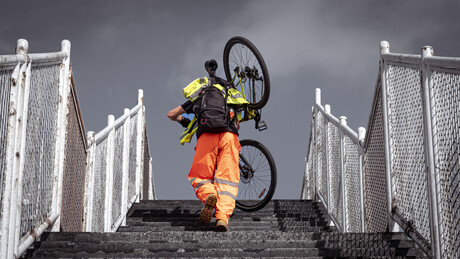
Using 45-year data of the same participants, Finnish researchers say they have made a link that, previously, could not be conclusively verified.
Finnish researchers who analysed longitudinal LISE study data following the same participants for 45 years have found that leisure-time physical activity improved work ability in later adulthood. Measured at school age (10–19), mid-adulthood (35–44) and late adulthood (55–64), higher levels of leisure-time physical activity throughout were clearly linked to better work ability in the study, which was published in the British Journal of Sports Medicine (doi: 10.1136/bjsports-2025-110339).
Based on these measurements, the researchers from the University of Jyväskylä defined a lifetime leisure-time physical activity level and examined its association with work ability in late adulthood. The study demonstrates — by utilising repeated measurements — that regular leisure-time physical activity promotes work ability later in life, a link, the researchers say, that could not previously be conclusively verified.
“In previous studies, physical activity and work ability have been measured at the same point in time, or nearly so, which creates a risk of reverse causality,” said postdoctoral researcher Perttu Laakso from the Faculty of Sport and Health Sciences at the University of Jyväskylä. “This is because health problems that reduce work ability can also lead to a decrease in physical activity.”
The researchers also make the point that investing in young people’s physical activity is economically profitable — particularly in childhood and adolescence, as previous studies show that individuals tend to maintain physical activity habits adopted at a young age into adulthood. “From an economic perspective, prioritising physical activity among young people is essential,” Laakso said. “This is an investment in a healthy and productive future workforce.”
222 in 2025 — "confronting" data reveals highest annual worker fatalities since 2012
Safe Work Australia has published the Key Work Health and Safety Statistics Australia 2026,...
Hospital trials paid worker exercise
Around 100 Nepean Hospital workers will take part in a 12-month trial, involved in activities...
Five emerging transport leaders create utilities digital platform solution
The team set out to solve one of construction's most persistent problems: accessing accurate...